
10 largecaps stocks which stand to gain from the Budget.

'From tariff tensions and border skirmishes to unrest in West Asia.' 'The worst may be behind us. But any further upmove will now have to come from earnings.'

The Rs 1.5-trillion-a-year industry has ended the year with a 30 per cent fall in sales because after a steady recovery in the festive season, multiple factors dashed its hopes of revival at the end of the year.

While FMCG companies lose Rs 98,928 crore in m-cap, consumer durables stocks are down Rs 20,673 crore since November 8.

This week, market leader LG Electronics -- with Rs 5,000 crore (Rs 50 billion) sales turnover -- reported a 20 per cent growth in sales from its Indian operations in the first six months of the year.

The Rs 30,000-crore consumer durables market is expected to rake in more money this summer on the back of rising mercury levels.

India's industrial production output decelerated to 4.8 per cent year-on-year in July 2024, mainly due to poor performance of the manufacturing and mining sectors, as per official data released on Thursday. The factory output growth, measured in terms of the Index of Industrial Production (IIP), was revised to 4.7 per cent in June from provisional estimates of 4.2 per cent released last month. The IIP for July 2024 was 4.8 per cent, as per the data.

Consumer durables retailers and manufacturers may end up bearing the cost of the Reserve Bank of India's (RBI's) tightening on easy personal loans, as their margins are expected to be impacted by higher borrowing costs. During the recently passed festival season, consumer durables companies started offering longer tenure loans, zero down payments, and zero interest on a wider assortment of products than ever before, making the products more affordable. While 18- and 24-month easy monthly instalment (EMI) options were available earlier, companies offered them only on select products; now, they are being extended to a larger section of products.

Industry body to write to commerce ministry, seek regulation for e-tailers.

Declining interest rates, a near-normal monsoon leading to higher rural incomes and pay hikes for central government employees are key triggers, says Dev Chatterjee.

From the 30-share pack, Hindustan Unilever, Tata Motors, Axis Bank, Nestle India, Asian Paints, ITC, Reliance Industries, Mahindra & Mahindra, IndusInd Bank and State Bank of India were among the laggards. Larsen & Toubro, Tata Steel, JSW Steel, HDFC Bank, Adani Ports, Kotak Mahindra Bank, Bharti Airtel and PowerGrid were among the gainers.
If you are are shopping for new models of consumer durables at lower price points, you are unlikely to find many options.

The factory gate duty on SUVs stands at the reduced rate of 24 per cent as against 30 per cent.

Flat steel producers -- SAIL, Tata Steel, Essar, Bhushan Steel and JSW -- have increased prices up to Rs 2,000 a tonne on the back of rising demand.

Shekhar Bajaj, chairman and managing director of the firm, explains to Viveat Susan Pinto on what led to this sales jump, besides throwing light on the benefits accruing to the sector on account of the GST rate cuts in appliances.

India's industrial production slowed to a five-month low of 4.2 per cent in June 2024, mainly due to poor performance of the manufacturing sector, though power and mining sectors continue to perform well, as per official data released on Monday. The factory output growth, measured in terms of the Index of Industrial Production (IIP), was 6.2 per cent in May, 5 per cent in April, 5.5 per cent in March, 5.6 per cent in February and 4.2 per cent in January 2024.

Investors lost Rs 24.69 lakh crore in market valuation in the last four days of severe drubbing in the equity market. Spike in global crude prices, unabated foreign fund outflows, a strong US jobs data diminishing early rate cut expectations, and the rupee logging its steepest single-day fall in nearly two years dampened investors' sentiment.

Glass facades and air-conditioned enclaves are giving way to spaces that breathe -- homes that reflect a deeper connection to nature, heritage, and well-being.

From the 30-share Sensex blue-chip pack, Titan, Adani Ports, UltraTech Cement, Tata Consultancy Services, NTPC, Bharti Airtel, Tech Mahindra, Infosys, Hindustan Unilever and JSW Steel were the biggest laggards.

With the Adani and Jindal groups and Mukesh Ambani-owned Reliance Industries joining the race to buy Videocon Industries' (VIL's) assets, lenders are expecting aggressive bids for VIL's consumer durables and overseas oil assets, which are to be sold in separate auctions. The entire asset sale exercise is expected to be completed in the next six months, said a banker. A promoter entity of Naveen Jindal-owned Jindal Steel and Power has also evinced interest in the second round of bids for VIL's consumer durable business. The deadline to submit bids for VIL's assets ended on February 2.

Among the Sensex firms, Titan, Asian Paints, ITC, Hindustan Unilever, Nestle India, Bajaj Finserv and Bharti Airtel were among the gainers. In contrast, UltraTech Cement, Tech Mahindra, Tata Steel, Power Grid, HDFC Bank, HCL Technology, State Bank of India and ICICI Bank were the laggards.

'If our Budget allows, we may implement both measures -- making income up to Rs 10 lakh tax-free and introducing a 25 per cent slab for income between Rs 15 lakh and Rs 20 lakh.'

From the Sensex pack, Reliance Industries, Bajaj Finserv, HDFC Bank, Adani Ports, Maruti Suzuki India, Axis Bank, Hindustan Unilever, Sun Pharmaceuticals and Asian Paints were among the laggards. Reliance Industries fell the most by 2.38 per cent to close at Rs 1,171.10 apiece.

After a gap of nearly two years, India's industrial production turned negative as it contracted by 0.1 per cent in August, mainly due to a decline in the mining and power generation sectors' output, in addition to an almost flat expansion in the manufacturing sector. According to the data released by the National Statistical Office (NSO), factory output growth based on the Index of Industrial Production (IIP) has also been revised downwards for July to 4.7 per cent from the earlier estimate of 4.8 per cent. "The IIP growth rate for the month of August 2024 is (-) 0.1 per cent, which was 4.7 per cent in the month of July 2024," NSO said in a release.

Benchmark Sensex advanced 110 points in a choppy trade on Wednesday, extending its gains to the fourth day in a row helped by buying in HDFC Bank, ICICI Bank and fresh foreign fund inflows. The 30-share barometer rose by 110.58 points or 0.14 per cent to settle at 80,956.33 with 14 of its constituents ending with gains and 16 stocks with losses. During the day, it jumped 399.64 points or 0.49 per cent to 81,245.39 and dipped to a low of 80,630.53.

People are availing far more of certain kinds of unsecured loans than was the case before the pandemic. Bank lending for buying consumer durables and funding of credit cards and other personal loans have risen by Rs 6.9 trillion between August 2019 and August 2023, shows a Business Standard analysis of data from the Reserve Bank of India (RBI). These loans are typically unsecured, which means they are provided without collateral.

Finance Minister (FM) Nirmala Sitharaman has presented a forward-looking Budget, reinforcing the government's commitment to 'Reform, Perform, and Transform'.

After a brutal selloff since October, foreign portfolio investor (FPI) flows for the year-to-date (YTD) in 2024 have turned negative. In early September, YTD FPI investments peaked at a record Rs 22,000 crore ($2.6 billion). This wave of selling has also pulled down benchmark indices, with the Nifty's YTD returns declining to 11 per cent from their high of 21 per cent in September.

Havells India, the country's largest listed consumer electrical company, reported a mixed performance in the 2024-25 (FY25) October-December quarter (Q3). While the top line benefited from festival demand, lower margins impacted operational performance.

As temperatures shoot up this month signalling an early onset of summer, sales of air conditioners (AC) are set to increase, with companies expected to hike the prices of ACs by 4-5 per cent due to component shortages. Leading players like Haier and Bluestar and suppliers like EPack Durables have raised their production capacities to meet the 25-30 per cent rise in demand expected in the coming months.

Double whammy for consumer firms, where the top line will remain subdued due to demonetisation and margins will squeeze owing to a crude oil spike and rupee depreciation, reports Viveat Susan Pinto/Business Standard from Mumbai.

India's industrial production growth slipped to 3-month low of 5 per cent in April 2024, mainly due to poor show by the manufacturing sector, though mining and power segments performed well, according to official data released on Wednesday. Factory output growth, measured in terms of the Index of Industrial Production (IIP), was 5.4 per cent in March and 5.6 per cent in February 2024. The previous low of IIP was recorded at 4.2 per cent in January, 2024.
.jpg)
A discount on the product may make a credit card loan seem cheaper than a consumer durable loan. But missing a payment in case of the former will mean exorbitant charges.

Tata Harrier.ev versus Mahindra BE.06 versus Mahindra XEV.9E -- which one should you buy? Rajesh Karkera offers a checklist of features to influence your decision.

India's industrial production growth slowed marginally to 4.9 per cent month-on-month in March 2024, mainly due to poor show by the mining sector, according to official data released on Friday. The factory output growth, measured in terms of the Index of Industrial Production (IIP), was 5.6 per cent in February 2024. However, it was 1.9 per cent in March 2023.

'2025 is the year to build a portfolio for the future. Focus this year should be on valuations and visible growth.'

Among the 30 Sensex companies, Axis Bank, HDFC Bank, ICICI Bank, Kotak Mahindra Bank, IndusInd Bank, State Bank of India, Infosys, Wipro, Tech Mahindra and HCL Technologies were the gainers. On the other hand, Titan, Maruti, Bharti Airtel, Larsen & Toubro, NTPC, Reliance Industries, Bajaj Finance and Power Grid were among the laggards.

Overall market reaction to the Budget was neutral. Investors absorbed the changes to the tax rates (positive for salaried class) and capital gains taxes (CGTs, negative due to the removal of indexation and increases. Other proposals largely pertain to supporting rural development, buybacks taxed as dividends, Custom duty changes that impact multiple sectors, higher outlays for clean energy, etc. There's some moderation in the growth of capex outlay across defence, fer
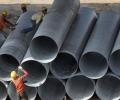
The festive season will mean business for the steel industry as it is the time when automotive and consumer appliance companies bump up demand to prepare for higher sales, experts have said. Ranjan Dhar, chief marketing officer at ArcelorMittal Nippon Steel India (AM/NS India), said that bookings by auto and consumer appliance industries are 20 per cent higher ahead of the festive season compared to last year. "While this could be for a couple of months, it could normalise later at approximately 10 per cent," he said.
 © 2026 Rediff.com - Advertise with us - Disclaimer - Privacy Policy - Sitemap - Feedback - About us - Terms of use - Grievances